

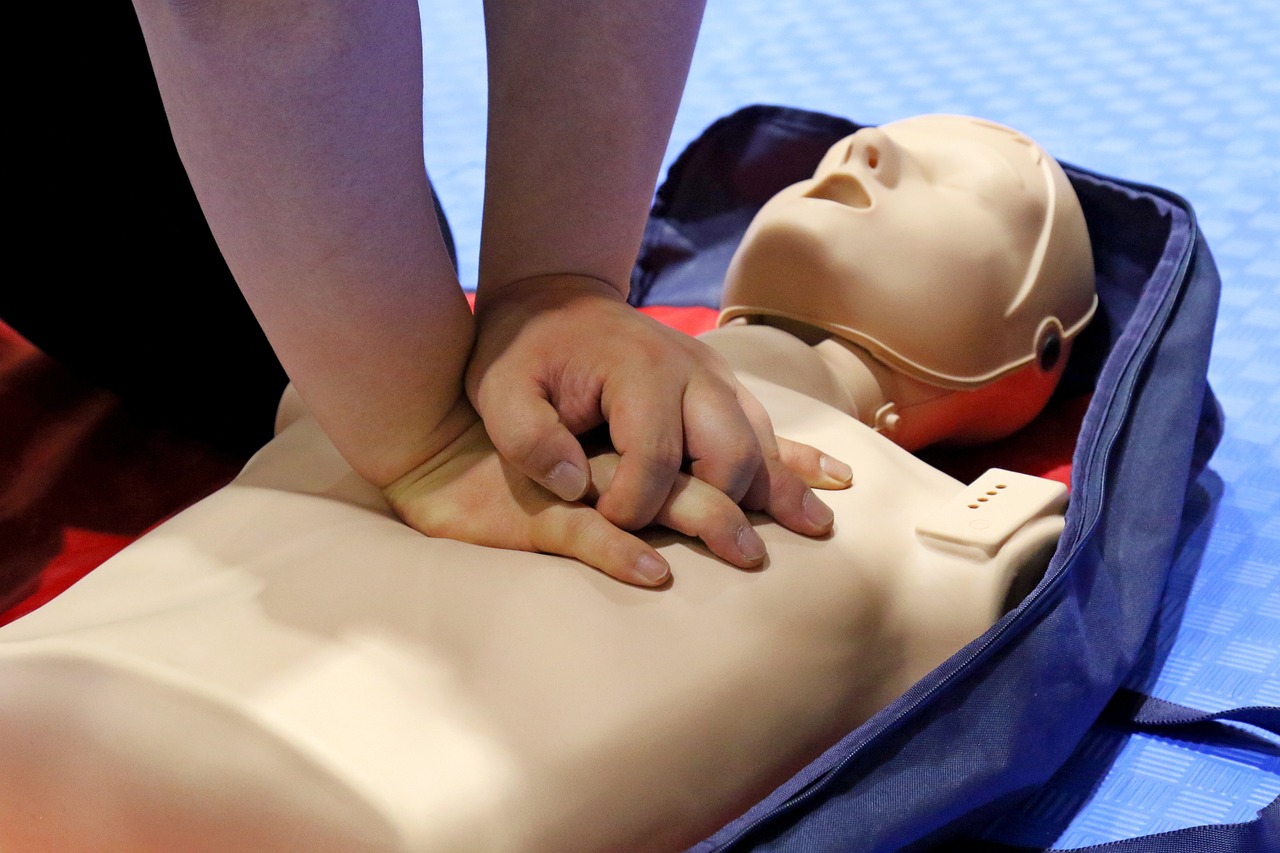
What is CPR?
Cardiopulmonary Resuscitation (CPR) is a life-saving technique used when someone’s heart stops beating or they stop breathing, commonly due to cardiac arrest, drowning, or other critical conditions. The primary goal of CPR is to restore partial blood flow to the brain and heart until emergency responders can provide advanced care.
CPR typically involves two main steps:
- Chest Compressions: Pressing down on the chest helps circulate blood to keep vital organs supplied with oxygen.
- Rescue Breaths (in some cases): Providing breaths to the person through mouth-to-mouth resuscitation, which supplies oxygen to the lungs and bloodstream.
What is BLS?
Basic Life Support (BLS) is a higher-level certification that includes CPR but expands to cover a broader range of emergency response skills, making it ideal for healthcare professionals and those in advanced medical roles. BLS prepares individuals to handle more complex situations and to work in teams under high-stress conditions.
Key areas covered in BLS include:
- High-Quality CPR: Ensuring optimal technique and timing for chest compressions and rescue breaths.
- AED Use: Training on how to operate an Automated External Defibrillator (AED), a critical tool for restoring a regular heart rhythm.
- Airway Management: Methods to ensure the airway remains open, sometimes including advanced equipment if the professional is trained to use it.
- Team Dynamics: Guidance on effectively working within a team in an emergency, crucial in hospital and clinic settings.
Key Differences Between BLS and CPR
| Feature | CPR | BLS |
|---|---|---|
| Target Audience | General public, teachers, caregivers | Healthcare professionals, emergency responders |
| Focus | Basic chest compressions and rescue breaths | Advanced CPR, AED use, team-based dynamics |
| Depth of Training | Basic emergency response | In-depth, team-focused, includes AED and airway management |
| Equipment Used | Minimal, often no special tools | AED, possibly basic airway tools |
| Certification | Short course, common in first aid training | Comprehensive certification, often required for healthcare roles |
Which One Do You Need?
- CPR certification is perfect for anyone who wants to be prepared for emergencies, including parents, teachers, and workplace safety officers.
- BLS certification is often a requirement for healthcare providers like nurses, doctors, EMTs, and others working in medical settings where advanced emergency response is necessary.
Final Thoughts
Both BLS and CPR are invaluable skills, potentially making a difference in life-or-death situations. While CPR focuses on basic techniques that anyone can use in an emergency, BLS provides a more advanced and team-centered approach. Each plays a unique role in emergency response, equipping individuals to act confidently and effectively when seconds matter most.
Share this:
- Tweet
- Print (Opens in new window) Print
- Email a link to a friend (Opens in new window) Email
- Share on Tumblr

- Share on Telegram (Opens in new window) Telegram
- Share on Threads (Opens in new window) Threads
- Share on WhatsApp (Opens in new window) WhatsApp
- Share on Mastodon (Opens in new window) Mastodon
- Share on Nextdoor (Opens in new window) Nextdoor
- Post
- Share on Bluesky (Opens in new window) Bluesky

Related
Discover more from The Growth Blueprint
Subscribe to get the latest posts sent to your email.