

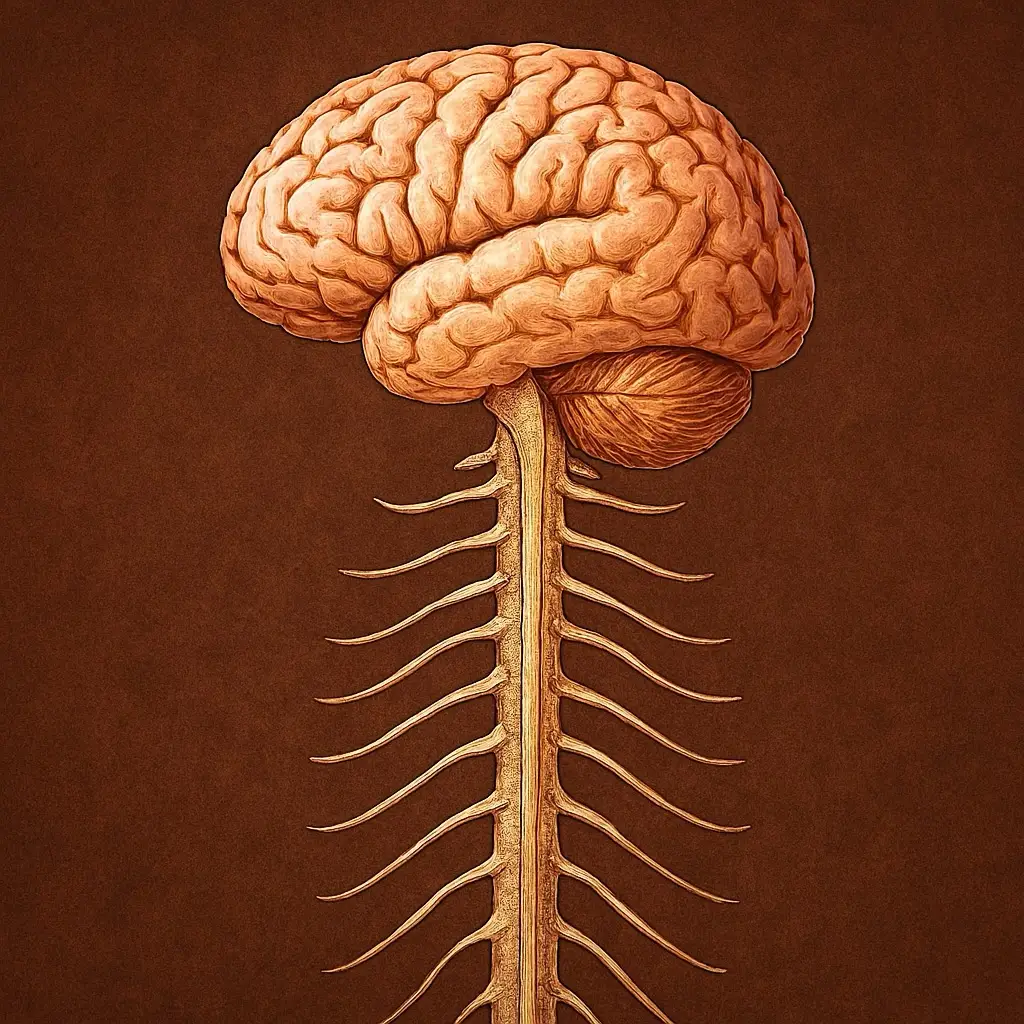
The Central Nervous System: The Control Center Behind Every Thought, Feeling, and Reaction
— The MedXpressionz Way
When people talk about mental health, they often jump straight to emotions or diagnoses. But before feelings turn into behaviors and before stress turns into burnout everything starts in the Central Nervous System (CNS).
What Is the Central Nervous System?
The central nervous system is made up of two primary structures:
The brain – the command center for thoughts, emotions, memory, decision-making, and regulation The spinal cord – the communication highway carrying messages between the brain and the rest of the body
Together, they control:
Mood and emotional responses Focus, attention, and clarity Stress reactions (fight, flight, freeze) Sleep, appetite, and energy levels How we respond under pressure mentally and physically
In simple terms:
Your CNS decides whether you feel calm or chaotic, grounded or overwhelmed.
When the CNS Is Overloaded
Modern life doesn’t give the nervous system much downtime. Trauma, grief, deadlines, caregiving, financial stress, and constant stimulation can push the CNS into survival mode.
Signs your CNS may be overloaded:
Racing thoughts or mental fog Emotional numbness or irritability Shallow breathing, tension, headaches Trouble sleeping or staying focused Feeling “on edge” for no clear reason
This isn’t weakness.
It’s a nervous system asking for regulation not judgment.
Mental Health Quick Care: First Response for the Nervous System
This is where Mental Health Quick Care comes in.
Mental Health Quick Care is not therapy replacement and it’s nervous system first aid.
Just like urgent care stabilizes the body before long-term treatment, Mental Health Quick Care focuses on:
Immediate grounding Emotional stabilization Reducing nervous system overload Helping people regain control in the moment
It meets people where they are especially when reflection feels impossible and survival mode is active.
The Mindset Gym: Training the CNS for Strength & Recovery
If Mental Health Quick Care is the emergency response, the Mindset Gym is ongoing conditioning.
The Mindset Gym trains the nervous system through:
Mental workouts (reframing, awareness, emotional naming) Breathwork paired with intention Body-mind integration (movement + thought regulation) Stress resilience exercises Nervous system literacy and understanding your own signals
You don’t wait until your body collapses to exercise.
You shouldn’t wait until your mind collapses to train your nervous system.
The MedXpressionz Approach
At MedXpressionz, we believe:
Mental health is biological and spiritual Regulation comes before reflection Healing starts with understanding how the brain and body communicate Strength is built through consistency, not crisis
We don’t ask, “What’s wrong with you?”
We ask, “What is your nervous system responding to?”
A Spiritual & Natural Affirmation
(Speak this slowly. Let your body catch up to your words.)
“My nervous system is allowed to rest.
I release survival mode and receive peace.
My mind, body, and spirit are learning safety again.
I am regulated. I am supported. I am not behind.”
Take a deep breath in through your nose.
Hold for three seconds.
Exhale slowly through your mouth.
That’s regulation in real time.
Want to Go Deeper?
Explore tools, journals, and mindset resources designed to support nervous system regulation the MedXpressionz way:
👉 Stan Store: https://stan.store/medxpressionzllc
If this resonated with you, share it with someone whose nervous system could use a little grace today.
Healing doesn’t start with perfection but it starts with awareness.
Share this:

Discover more from The Growth Blueprint
Subscribe to get the latest posts sent to your email.